In-Company Training Catalogue
Advanced EMDR and trauma-treatment workshops by Ad de Jongh, PhD and Suzy Matthijssen, PhD, delivered on-site at your organisation or live online for your team.
Click any training below to open the full programme. Interested? Fill in the contact form at the bottom of this page.
Training for your organisation
Every workshop in this catalogue can be booked as an in-company training. We come to your organisation, or we deliver the same programme live online for your team.
All trainings are given by Ad de Jongh, PhD and Suzy Matthijssen, PhD, and are built on their clinical work and on published research.
What every training includes
- A full training day of six contact hours with an internationally recognised trainer
- Video fragments of real treatment sessions and live demonstrations
- Practice exercises and room for your team’s own case material
- Slides and handouts for every participant
- Programme content tailored to your patient population
- EMDRIA CE credits on request (additional costs apply)
- Delivered in English; a number of trainings are also available in Dutch on request
The catalogue
Thirteen trainings. Click a title to open the full programme, learning objectives and scientific background.
Book as a series
Trainings 1, 2 and 3 together form the complete three-day EMDR 2.0 advanced programme (Day 1 → Day 2 → Day 3). They can be booked individually, or as one consecutive three-day training for your team.
1. EMDR 2.0: Enhancing EMDR Therapy (Day 1)
The EMDR 2.0 foundation day: how to make EMDR therapy faster and more powerful by maximising memory activation, motivation and working-memory load.
About this training
EMDR therapy prospers in a climate that supports innovation but insists upon corroborating research to validate findings. To this end, EMDR 2.0 is a version of EMDR therapy that is based on the EMDR standard protocol, but with a number of adjustments with regard to the implementation of EMDR therapy. These adjustments are based on clinical experience with the treatment of patients with complex PTSD, scientific research into the working memory theory, and the effects of working memory-taxing tasks on traumatic memories. More specifically, EMDR 2.0 is based on the premise that if the client is highly motivated, if the memory is sufficiently activated, and if the patient’s working memory is taxed strongly, there will be a positive influence on the effectiveness and efficiency of EMDR therapy.
The purpose of this training is to gain new inspiration for the treatment of patients suffering from chronic and severe PTSD and/or with severe comorbid psychopathology who display high levels of anxiety and dissociation, and with whom limited treatment effects were reached. During this training, effective new EMDR applications will be demonstrated varying from modality-specific working memory-taxing techniques, and other techniques that are meant to destabilize memories. The training includes teaching through video fragments of treatments in clinical practice.
Key features
Research supported concepts presented
- The greater the working-memory load, the greater the desensitising effects
- More arousal appears to have a stronger desensitising effect
- Modality-specific taxation can provide an additional effect
- Unexpected (“surprise”) intervention techniques can interrupt the reconsolidation of the memory
Learn a range of memory-taxing tasks including
- super-fast eye movements with varying patterns (V),
- spelling tasks (V/A),
- saying words out loud (A),
- shock effects (V/A), tapping complex rhythms (K),
- V-steps (K) and
- the “EMD bomb” (V/A/K)
Learning objectives
Participants will be able to:
- Describe the working memory theory
- List research findings supporting the working memory theory
- Identify ways to motivate clients for reprocessing memories that have a high level of disturbance
- Describe techniques for enhancing activation of traumatic memories
- Identify and employ multiple memory-taxing tasks to aid in reprocessing traumatic memories
- Describe techniques for destabilising memories, including the “EMD bomb”
Programme (one training day)
- Part 1 (90 min)
- Working memory theory, consequences for treatment, and exercise
- Part 2 (90 min)
- Trauma activation, desensitisation, modality-specific taxing, and exercise
- Part 3 (90 min)
- Different working-memory taxing tasks, practical tips and demonstration
- Part 4 (90 min)
- Dealing with mnemophobia, the “EMD bomb”, and exercise
Timing is indicative. The day runs as one full training day with two short breaks and a lunch break, and can be adapted to your organisation’s schedule.
Who should attend
Mental health professionals with a completed basic EMDR training.
Trainers
Ad de Jongh, PhD and Suzy Matthijssen, PhD. Full biographies are further down this page.
Accreditation
EMDRIA CE credits can be arranged on request. Additional costs apply. Accreditation in other countries can be discussed when you send your request.
Scientific references (18)
Baddeley, A.D. (2012). Working memory: theories, models, and controversies. Annual Review of Psychology, 63, 12.1-12.29.
De Jongh, A., De Roos, C., El-Leithy, S. (2024). State of the science: Eye movement desensitization and reprocessing (EMDR) therapy. Journal of Traumatic Stress, 37, 2, 205–216. https://doi.org/10.1002/jts.23012
De Jongh, A., Ernst, R., Marques, L. & Hornsveld, H. (2013). The impact of eye movements and tones on disturbing memories of patients with PTSD and other mental disorders. Journal of Behavior Therapy and Experimental Psychiatry, 44, 447-483.
De Voogd, L. D., & Phelps, E. A. (2020). A cognitively demanding working memory intervention enhances extinction. Scientific Reports, 10(1), Article 7020. https://doi.org/10.1038/s41598-020-63811-0
Hase, M., Balmaceda, U. M., Ostacoli, L., Liebermann, P., & Hofmann, A. (2017). The AIP model of EMDR therapy and pathogenic memories. Frontiers in Psychology, 8, Article 1578. https://doi.org/10.3389/fpsyg.2017.01578
Littel, M., Remijn, M., Tinga, A.M., Engelhard, I.M., & van den Hout, M.A. (2017). Stress enhances the memory-degrading effects of eye movements on emotionally neutral memories. Clinical Psychological Science, 5, 316-324.
Littel, M. & van Schie, K. (2019). No evidence for the inverted U-Curve: More demanding dual tasks cause stronger aversive memory degradation. Journal of Behavior Therapy and Experimental Psychiatry, 65, 101484.
Matthijssen, S.J.M.A., Verhoeven, L.C.M., Heitland, I. & van den Hout, M.A. (2017). Auditory and Visual Memories in PTSD Patients Targeted with Eye Movements and Counting: The Effect of Modality-Specific Loading of Working Memory. Frontiers in Psychology, 8:1937.
Matthijssen, S.J.M.A., Beerschoten, L.M., De Jongh, A., Klugkist, I.G., & van den Hout, M.A. (2019). Effects of "Visual Schema Displacement Therapy" (VSDT), an abbreviated EMDR protocol and a control condition on emotionality and vividness of aversive memories: two critical analogue studies. Journal of Behavior Therapy and Experimental Psychiatry, 63, 48-56. https://doi.org/10.1016/j.jbtep.2018.11.006
Matthijssen, S. J. M. A., van Schie, K., & van den Hout, M. A. (2018). The Effect of modality specific interference on working memory in recalling aversive auditory and visual memories. Cognition and Emotion, 1-12. doi:10.1080/02699931.2018.1547271
Matthijssen, S.J.M.A., Brouwers, T.C., van Roozendaal, C., Vuister, T.C.M., & De Jongh, A. (2021). The effect of EMDR versus EMDR 2.0 on emotionality and vividness of aversive memories in a non-clinical sample. European Journal of Psychotraumatology, 12:1, 1956793. https://doi.org/10.1080/20008198.2021.1956793
U.S. Department of Veterans Affairs and the Department of Defense. (2023). VA/DoD Clinical Practice Guideline for the Management of Posttraumatic Stress Disorder and Acute Stress Disorder. https://www.healthquality.va.gov/guidelines/MH/ptsd/VA-DoD-CPG-PTSD-Full-CPG.pdf
Van den Hout, M. A., Eidhof, M. B., Verboom, J., Littel, M., & Engelhard, I. M. (2014). Blurring of emotional and nonemotional memories by taxing working memory during recall. Cognition and Emotion, 28, 717–727.
Veen, S.C. van, Schie, K. van, Wijngaards-de Meij, L.D.N.V., Littel, M., Engelhard, I.M. & Hout, M.A. van den (2015). Speed matters: relationship between speed of eye movements and modification of aversive autobiographical memories. Frontiers in Psychiatry, 6, 2-9.
Yaşar, A. B., Kavakçı, Ö., Çiftçi, Z. Z., Tunca, G. A., Uygun, E., Gündoğmuş, İ., ... & Konuk, E. (2023). The effectiveness of online EMDR 2.0 group protocol on posttraumatic stress disorder symptoms, depression, anxiety, and stress in individuals who have experienced a traffic accident: a preliminary study. Journal of EMDR Practice and Research.
Yunitri, N., Chu, H., Kang, X. L., Wiratama, B. S., Lee, T. Y., Chang, L. F., Liu, D., Kustanti, C. Y., Chiang, K. J., Chen, R., Tseng, P., & Chou, K. R. (2023). Comparative effectiveness of psychotherapies in adults with posttraumatic stress disorder: A network meta-analysis of randomised controlled trials. Psychological medicine, 53(13), 6376–6388. https://doi.org/10.1017/S0033291722003737
Wadji, D. L., Martin-Soelch, C., & Camos, V. (2022). Can working memory account for EMDR efficacy in PTSD? BMC Psychology, 10(1), Article 245. https://doi.org/10.1186/s40359-022-00951-0
Wilhelmus, B., Marissen, M. A., van den Berg, D., Driessen, A., Deen, M. L., & Slotema, K. (2023). Adding EMDR for PTSD at the onset of treatment of borderline personality disorder: A pilot study. Journal of Behavior Therapy and Experimental Psychiatry, 79, Article 101834. https://doi.org/10.1016/j.jbtep.2023.101834
2. Powerful Techniques within EMDR Therapy: EMD Bomb, Flash 1.0, Flashforward and Mental Video Check (Day 2)
Four powerful techniques for patients who are too afraid or too avoidant to start trauma-focused therapy, and for anticipatory anxiety that outlives the memory.
About this training
In this workshop, Ad de Jongh and Suzy Matthijssen explain how clinicians can use special EMDR techniques which can be applied to treat patients with a variety of mental health conditions, including Complex PTSD. They will show how to deal with the ingrained avoidance patterns of patients who are too afraid and avoidant to get started with trauma-focused therapy. Through extensive - and step-by-step - demonstrations the presenters will illustrate the application of these EMDR 2.0 consistent (i.e., including deliberate taxation of working memory) techniques - as well as various titration techniques designed to help patients manage the affect associated with EMDR procedures to help patients to continue effective reprocessing.
Additionally, this workshop will teach, with examples, the use of the Flashforward technique which addresses anticipatory anxiety. The effectiveness and versatility of the Flashforward technique has been strongly scientifically substantiated. In this workshop you will learn how to use the Flashforward technique in combination with the Mental Video Check, another technique, which is used as an indispensable method in the treatment of anxiety disorders with EMDR therapy. You will also learn how to use the Flashforward technique with patients who are inclined to dissociate such as those with complex PTSD or borderline personality disorder features. All techniques can be used in both on-site and virtual therapy and the “how to’s” for each will be discussed.
Key features
- Step-by-step demonstrations of the “EMD bomb” and Flash 1.0
- Titration techniques that keep reprocessing going when affect runs high
- Memory-taxing tasks such as fast eye movements and spelling tasks
- The Flashforward procedure combined with the Mental Video Check
- Application with dissociation-prone patients, face to face and remotely
Learning objectives
Participants will be able to:
- Describe the indication areas for which the “EMD bomb” and “Flash 1.0” can be used
- Describe possible advantages of using the “EMD bomb” and “Flash 1.0”
- Describe how the “EMD bomb” and “Flash 1.0” can be used in individuals suffering from Complex PTSD, in both on-site and virtual therapy
- Describe several titration techniques to maintain successful reprocessing of memories
- Describe the indication areas for the Flashforward technique and the Mental Video Check
- Describe possible advantages of using the Flashforward technique and the Mental Video Check
- Describe how the Flashforward technique can be used when dissociation is preventing access to traumatic memories
- Describe how the Flashforward technique can be used via virtual therapy
Programme (one training day)
- Part 1 (90 min)
- Introduction to the EMD bomb and Flash 1.0
- Titration techniques to keep processing memories
- Part 2 (90 min)
- Memory-taxing tasks (e.g., fast eye movements and spelling tasks)
- Use of the EMD bomb and Flash 1.0 in Complex PTSD, face to face and remotely
- Part 3 (90 min)
- Step-by-step demonstration
- The Flashforward technique combined with the Mental Video Check
- Demonstration and practicum
- Part 4 (90 min)
- The Flashforward technique with dissociation-prone patients, for example those with Complex PTSD or borderline personality disorder
- Flashforward and online therapy
- Q&A
Timing is indicative. The day runs as one full training day with two short breaks and a lunch break, and can be adapted to your organisation’s schedule.
Who should attend
Mental health professionals with a completed basic EMDR training.
Trainers
Ad de Jongh, PhD and Suzy Matthijssen, PhD. Full biographies are further down this page.
Accreditation
EMDRIA CE credits can be arranged on request. Additional costs apply. Accreditation in other countries can be discussed when you send your request.
Scientific references (17)
De Jongh, A., Ernst, R., Marques, L. & Hornsveld, H. (2013). The impact of eye movements and tones on disturbing memories of patients with PTSD and other mental disorders. Journal of Behavior Therapy and Experimental Psychiatry, 44, 447-483.
De Voogd, L. D., & Phelps, E. A. (2020). A cognitively demanding working memory intervention enhances extinction. Scientific Reports, 10(1), Article 7020. https://doi.org/10.1038/s41598-020-63811-0
Hase, M., Balmaceda, U. M., Ostacoli, L., Liebermann, P., & Hofmann, A. (2017). The AIP model of EMDR therapy and pathogenic memories. Frontiers in Psychology, 8, Article 1578. https://doi.org/10.3389/fpsyg.2017.01578
Littel, M., Remijn, M., Tinga, A.M., Engelhard, I.M., & van den Hout, M.A. (2017). Stress enhances the memory-degrading effects of eye movements on emotionally neutral memories. Clinical Psychological Science, 5, 316-324.
Littel, M. & van Schie, K. (2019). No evidence for the inverted U-Curve: More demanding dual tasks cause stronger aversive memory degradation. Journal of Behavior Therapy and Experimental Psychiatry, 65, 101484.
Matthijssen, S.J.M.A., Verhoeven, L.C.M., Heitland, I. & van den Hout, M.A. (2017). Auditory and Visual Memories in PTSD Patients Targeted with Eye Movements and Counting: The Effect of Modality-Specific Loading of Working Memory. Frontiers in Psychology, 8:1937.
Matthijssen, S.J.M.A., Beerschoten, L.M., De Jongh, A., Klugkist, I.G., & van den Hout, M.A. (2019). Effects of "Visual Schema Displacement Therapy" (VSDT), an abbreviated EMDR protocol and a control condition on emotionality and vividness of aversive memories: two critical analogue studies. Journal of Behavior Therapy and Experimental Psychiatry, 63, 48-56. https://doi.org/10.1016/j.jbtep.2018.11.006
Matthijssen, S. J. M. A., van Schie, K., & van den Hout, M. A. (2018). The Effect of modality specific interference on working memory in recalling aversive auditory and visual memories. Cognition and Emotion, 1-12. doi:10.1080/02699931.2018.1547271
Matthijssen, S.J.M.A., Brouwers, T.C., van Roozendaal, C., Vuister, T.C.M., & De Jongh, A. (2021). The effect of EMDR versus EMDR 2.0 on emotionality and vividness of aversive memories in a non-clinical sample. European Journal of Psychotraumatology, 12:1, 1956793. https://doi.org/10.1080/20008198.2021.1956793
Van den Hout, M. A., Eidhof, M. B., Verboom, J., Littel, M., & Engelhard, I. M. (2014). Blurring of emotional and nonemotional memories by taxing working memory during recall. Cognition and Emotion, 28, 717–727.
U.S. Department of Veterans Affairs and the Department of Defense. (2023). VA/DoD Clinical Practice Guideline for the Management of Posttraumatic Stress Disorder and Acute Stress Disorder. https://www.healthquality.va.gov/guidelines/MH/ptsd/VA-DoD-CPG-PTSD-Full-CPG.pdf
Veen, S.C. van, Schie, K. van, Wijngaards-de Meij, L.D.N.V., Littel, M., Engelhard, I.M. & Hout, M.A. van den (2015). Speed matters: relationship between speed of eye movements and modification of aversive autobiographical memories. Frontiers in Psychiatry, 6, 2-9.
Yaşar, A. B., Kavakçı, Ö., Çiftçi, Z. Z., Tunca, G. A., Uygun, E., Gündoğmuş, İ., ... & Konuk, E. (2023). The effectiveness of online EMDR 2.0 group protocol on posttraumatic stress disorder symptoms, depression, anxiety, and stress in individuals who have experienced a traffic accident: a preliminary study. Journal of EMDR Practice and Research.
Yunitri, N., Chu, H., Kang, X. L., Wiratama, B. S., Lee, T. Y., Chang, L. F., Liu, D., Kustanti, C. Y., Chiang, K. J., Chen, R., Tseng, P., & Chou, K. R. (2023). Comparative effectiveness of psychotherapies in adults with posttraumatic stress disorder: A network meta-analysis of randomised controlled trials. Psychological medicine, 53(13), 6376–6388. https://doi.org/10.1017/S0033291722003737
Wadji, D. L., Martin-Soelch, C., & Camos, V. (2022). Can working memory account for EMDR efficacy in PTSD? BMC Psychology, 10(1), Article 245. https://doi.org/10.1186/s40359-022-00951-0
Wilhelmus, B., Marissen, M. A., van den Berg, D., Driessen, A., Deen, M. L., & Slotema, K. (2023). Adding EMDR for PTSD at the onset of treatment of borderline personality disorder: A pilot study. Journal of Behavior Therapy and Experimental Psychiatry, 79, Article 101834. https://doi.org/10.1016/j.jbtep.2023.101834
Wippich, A., Howatson, G., Allen-Baker, G., Farrell, D., Kiernan, M., & Scott-Bell, A. (2023). Eye movement desensitization reprocessing as a treatment for PTSD in conflict-affected areas. Psychological Trauma: Theory, Research, Practice, and Policy, Advance online publication. https://doi.org/10.1037/tra0001430
3. EMDR 2.0 Masterclass: Ad & Suzy Live in Action (Day 3)
A live-demonstration day. Ad and Suzy treat real client volunteers and think out loud, so you see assessment, case conceptualization and moment-to-moment clinical decisions as they happen.
About this training
This collaborative one-day intensive training session, led by Ad de Jongh and Suzy Matthijssen, delves into EMDR 2.0, focusing on integrating six special techniques to enhance the therapy process. Designed for therapists fully trained in both Basic EMDR and EMDR 2.0*, this training provides practical applications and demonstrations, fostering a deeper understanding of advanced strategies in trauma therapy.
In addition to an update on recent developments in the field of EMDR 2.0, this workshop will feature live demonstrations of clinical techniques with client volunteers. Client volunteers will work on real issues. They will be identified and prepared in advance for this live learning experience. As a participant, you will observe the active and spontaneous application of 2.0 methods as Ad and Suzy demonstrate assessment, case conceptualization, and moment-to-moment clinical decisions during phases 3-6. You will see an array of 2.0 special techniques and hear the insights of the presenters as they debrief each demonstration. Time will be allotted for questions and discussion.
* The prior EMDR 2.0 training requirements can be met by attending Day 1 and Day 2 of the Basic EMDR 2.0 Training.
Key features
- Live intake and case conceptualization with a real client volunteer
- Live treatment demonstrations applying EMDR 2.0 and its special techniques
- Debrief and insights from the presenters after each demonstration
- Interactive session with audience participation
- Updated 2.0 protocol and the latest research
Learning objectives
Participants will be able to:
- Describe 3 key EMDR therapy enhancements featured in EMDR 2.0
- List 3 key bits of clinical information determined in the clinical assessment demonstration
- Describe the case conception route theme used by the trainers in at least one of the demonstrations, and why it was selected
- Describe one or more special techniques used during the demonstration sessions
- List one or more memory-taxation methods used in one or more of the training demonstrations
- List one or more motivational methods used by the trainers during one or more of the training demonstrations
Programme (one training day)
- Part 1 (90 min)
- Overview of EMDR 2.0 applications and research
- Updated exploration of the special techniques
- Review of the updated 2.0 protocol
- Part 2 (90 min)
- Live demonstration: intake and case conceptualization
- Discussion of the demonstration and protocol application
- Part 3 (90 min)
- Treatment demonstration: applying EMDR 2.0 and special techniques
- Discussion and Q&A
- Part 4 (90 min)
- Treatment demonstration: applying EMDR 2.0 and special techniques (part II) and interactive session with audience participation
- Treatment discussion and Q&A
Timing is indicative. The day runs as one full training day with two short breaks and a lunch break, and can be adapted to your organisation’s schedule.
Who should attend
This workshop is suitable for mental health professionals who have basic training in EMDR 2.0 and the EMDR 2.0 special techniques and are looking to expand their skills with EMDR 2.0 and its associated special techniques, particularly in handling complex trauma cases.
Trainers
Ad de Jongh, PhD and Suzy Matthijssen, PhD. Full biographies are further down this page.
Accreditation
EMDRIA CE credits can be arranged on request. Additional costs apply. Accreditation in other countries can be discussed when you send your request.
Scientific references (15)
Alting van Geusau, V.V.P., de Jongh, A., Nuijs, M.D., Brouwers, T.C., Moerbeek, M. & Matthijssen, S.J.M.A. (2023) The effectiveness, efficiency, and acceptability of EMDR vs. EMDR 2.0 vs. the Flash technique in the treatment of patients with PTSD: study protocol for the ENHANCE randomized controlled trial. Frontiers in Psychiatry, 14, 1278052. https://doi.org/10.3389/fpsyt.2023.1278052
Alting van Geusau, V.V.P., Nuijs, M.D., De Jongh, A., Moerbeek, M., & Matthijssen, S.J.M.A. (2025). The relationship between changes in emotional intensity and treatment outcome in PTSD patients in EMDR therapy. European Journal of Psychotraumatology, 16:1, 2536973. https://doi.org/10.1080/20008066.2025.2536973
De Jongh, A., De Roos, C., El-Leithy, S. (2024). State of the science: Eye movement desensitization and reprocessing (EMDR) therapy. Journal of Traumatic Stress, 37, 2, 205–216. https://doi.org/10.1002/jts.23012
De Jongh, A., & Hafkemeijer, L. C. S. (2024). Trauma‐focused treatment of a client with Complex PTSD and comorbid pathology using EMDR therapy. Journal of Clinical Psychology, 80(4), 824-835.
Hofman, S., Hafkemeijer, L., De Jongh, A., & Slotema, C.W. (2025). Eye Movement Desensitization and Reprocessing Therapy in Persons With Personality Disorders: A Randomized Clinical Trial. JAMA Network Open, 8(9). https://doi.org/10.1001/jamanetworkopen.2025.33421
Littel, M., Remijn, M., Tinga, A.M., Engelhard, I.M., & van den Hout, M.A. (2017). Stress enhances the memory-degrading effects of eye movements on emotionally neutral memories. Clinical Psychological Science, 5, 316-324.
Littel, M. & van Schie, K. (2019). No evidence for the inverted U-Curve: More demanding dual tasks cause stronger aversive memory degradation Journal of Behavior Therapy and Experimental Psychiatry, 65, 101484.
Matthijssen, S.J.M.A., Brouwers, T.C., van Roozendaal, C., Vuister, T.C.M., & De Jongh, A. (2021). The effect of EMDR versus EMDR 2.0 on emotionality and vividness of aversive memories in a non-clinical sample. European Journal of Psychotraumatology, 12:1, 1956793. https://doi.org/10.1080/20008198.2021.1956793
Oren, E., Gündoğmuş, İ., & Yaşar, A. B. (2024). EMDR and the AIP Model: Healing the Scars of Trauma. Frontiers in Psychiatry, 15, 1469787.
Van den Hout, M. A., Eidhof, M. B., Verboom, J., Littel, M., & Engelhard, I. M. (2014). Blurring of emotional and nonemotional memories by taxing working memory during recall. Cognition and Emotion, 28, 717–727.
Van Pelt, Y., de Jongh, A., ten Broeke, E., Hornsveld, H., Oppenheim, H.J., Weijermans, J., & Luber, M.A. (2026). Practical Guide to EMDR Therapy: Case Conceptualization and Additional Treatment Strategies. Springer Publishing Company. [ISBN: 978-0-8261-5618-1. eBook ISBN: 978-0-8261-8066-7]. https://doi.org/10.1891/9780826180667
Veen, S.C. van, Schie, K. van, Wijngaards-de Meij, L.D.N.V., Littel, M., Engelhard, I.M. & Hout, M.A. van den (2015). Speed matters: relationship between speed of eye movements and modification of aversive autobiographical memories. Frontiers in Psychiatry, 6, 2-9.
Yaşar, A. B., Kavakçı, Ö., Çiftçi, Z. Z., Tunca, G. A., Uygun, E., Gündoğmuş, İ., ... & Konuk, E. (2023). The effectiveness of online EMDR 2.0 group protocol on posttraumatic stress disorder symptoms, depression, anxiety, and stress in individuals who have experienced a traffic accident: a preliminary study. Journal of EMDR Practice and Research.
Wadji, D. L., Martin-Soelch, C., & Camos, V. (2022). Can working memory account for EMDR efficacy in PTSD? BMC Psychology, 10(1), Article 245. https://doi.org/10.1186/s40359-022-00951-0
Wippich, A., Howatson, G., Allen-Baker, G., Farrell, D., Kiernan,M., & Scott-Bell, A. (2023). Eye movement desensitization reprocessing as a treatment for PTSD in conflict-affected areas. Psychological Trauma: Theory, Research, Practice, and Policy, Advance online publication. https://doi.org/10.1037/tra0001430
4. EMDR Beyond PTSD
AIP-informed case conceptualization and treatment recommendations for psychosis, anxiety, depression, personality disorders, somatic symptoms and childbirth-related trauma.
About this training
International treatment guidelines recommend EMDR therapy as an intervention of first choice for posttraumatic stress disorder. But because EMDR therapy is able to erode mental representations resulting from exposure to damaging events and to reduce the emotional charge of these memories, the method is increasingly being used and found to be effective in the treatment of a variety of other mental health conditions in addition to PTSD.
In this workshop, Suzy Matthijssen and Ad de Jongh discuss effective AIP informed case conceptualization backed by research findings that affirm a range of effective applications of EMDR therapy treating other clinical diagnosis and presenting problems.
The training features key findings and treatment recommendations for a variety of mental health conditions and patient groups that many consider difficult to treat. These include people presenting with symptoms of psychosis, anxiety disorders, personality disorders, depression, somatic symptoms, as well as those suffering from the psychological consequences of a traumatic childbirth and/or fear of childbirth. Treatment findings and recommendations will be illustrated by video clips of clinical treatment.
Key features
- AIP-informed case conceptualization, backed by research findings
- Psychotic disorders, including delusions and hallucinations
- Anxiety disorders, major depression and personality disorders
- Somatic symptom disorder, including tinnitus
- Pregnancy, traumatic childbirth and fear of childbirth
Learning objectives
Participants will be able to:
- Describe one or more examples of how EMDR therapy has been used with individuals dealing with:
- Psychotic disorder features
- Anxiety disorders
- Major depression
- Personality disorders
- Somatic symptom disorder
- Fear of childbirth and PTSD following childbirth
Programme (one training day)
- Part 1 (90 min)
- Case conceptualization for treating mental health disorders using EMDR therapy
- Case examples, Q&A and discussion
- Part 2 (90 min)
- EMDR with current psychosis and schizophrenia (delusions and hallucinations)
- EMDR with anxiety disorders
- Demonstration, Q&A and discussion
- Part 3 (90 min)
- EMDR with depression
- EMDR with personality disorders (particularly borderline PD)
- Q&A and discussion
- Part 4 (90 min)
- EMDR with somatic symptom disorder (incl. tinnitus)
- EMDR with pregnant women (incl. fear of childbirth)
- Q&A and discussion
Timing is indicative. The day runs as one full training day with two short breaks and a lunch break, and can be adapted to your organisation’s schedule.
Who should attend
This workshop is suitable for mental health professionals who have basic training in EMDR therapy and are looking to expand their skills, particularly in handling complex cases.
Trainers
Ad de Jongh, PhD and Suzy Matthijssen, PhD. Full biographies are further down this page.
Accreditation
EMDRIA CE credits can be arranged on request. Additional costs apply. Accreditation in other countries can be discussed when you send your request.
Scientific references (30)
Azimisefat, P., de Jongh, A., Rajabi, S., Kanske, P., & Jamshidi, F. (2022). Efficacy of virtual reality exposure therapy and eye movement desensitization and reprocessing therapy on symptoms of acrophobia and anxiety sensitivity in adolescent girls: A randomized controlled trial. Frontiers in Psychology. 13:919148. https://doi.org/10.3389/fpsyg.2022.919148
Baas, M.A.M., van Pampus, M.G., Braam, L., Stramrood, C., & De Jongh, A. (2020). The effects of PTSD treatment during pregnancy: systematic review and case study. European Journal of Psychotraumatology, 11:1, 1762310. https://doi.org/10.1080/20008198.2020.1762310
Baas M.A.M., van Pampus, M.G., Stramrood, C.A.I., M, Dijksman, L.M., Vanhommerig, J.W., & De Jongh, A. (2022). Treatment of pregnant women with fear of childbirth using EMDR therapy: results of a multi-centre randomized controlled trial. Frontiers in Psychiatry, 12:798249. https://doi.org/10.3389/fpsyt.2021.798249
Baas, M.A.M., Stramrood, C.A.I., Dijksman, L.M., Vanhommerig, J.W., De Jongh, A., & van Pampus, M.G. (2023). How safe is the treatment of pregnant women with fear of childbirth using eye movement desensitization and reprocessing therapy? Obstetric outcomes of a multi-center randomized controlled trial. Acta Obstetricia et Gynecologica Scandinavica, 00: 1-11. https://doi.org/10.1111/aogs.14628
Burger, S.R., Hardy, A., van der Linden, T., van Zelst, C., de Bont, P.A.J., van der Vleugel, B., Staring, A.B.P., de Roos, C., de Jongh, A., Marcelis, M., van Minnen, A., van der Gaag, M., van den Berg, D.P.G. (2023). The bumpy road of trauma-focused therapy: posttraumatic stress disorder symptom exacerbation in people with psychosis. Journal of Traumatic Stress, 36, 2, 299-309. https://doi.org/10.1002/jts.22907
Burger, S. R., Hardy, A., Verdaasdonk, I., van der Vleugel, B., Delespaul, P., van Zelst, C., de Bont, P. A. J., Staring, A. B. P., de Roos, C., de Jongh, A., Marcelis, M., van Minnen, A., van der Gaag, M., & van den Berg, D. (2025). The effect of trauma-focused therapy on voice-hearing: An experience sampling study. Psychology and Psychotherapy: Theory, Research and Practice, 98, 25–39. https://doi.org/10.1111/papt.12556
Chung, J., Knibbe, W., Chattrattrai, T., De Jongh, A., & Lobbezoo, F. (2025). Network analysis of temporomandibular disorder pain and subject-based bruxism in post-traumatic stress disorder patients. Journal of Oral Rehabilitation, 52(9), 1399-1405. https://doi.org/10.1111/joor.14007
de Bont P.A.J.M., van den Berg D.P.G., van der Vleugel B.M., De Roos C., De Jongh A., van der Gaag, M., & van Minnen, A. (2016). Prolonged exposure and EMDR for PTSD v. a PTSD waiting-list condition: effects on symptoms of psychosis, depression and social functioning in patients with chronic psychotic disorders Psychological Medicine, 46 (11), 2411-2421. https://doi.org/10.1017/S0033291716001094
De Bont, P.A.J.M., De Jongh, A., & van den Berg, D.P.G. (2019). Psychosis: an emerging field for EMDR research and therapy. Journal of EMDR Practice and Research, 13 (4), 313-324. http://dx.doi.org/10.1891/1933-3196.13.4.313
De Jongh, A., De Roos, C., El-Leithy, S. (2024). State of the science: Eye movement desensitization and reprocessing (EMDR) therapy. Journal of Traumatic Stress, 37, 2, 205–216. https://doi.org/10.1002/jts.23012
De Jongh, A., Ten Broeke, E., & Renssen, M.R. (1999). Treatment of specific phobias with Eye Movement Desensitization and Reprocessing (EMDR): Protocol, empirical status, and conceptual issues. Journal of Anxiety Disorders, 13, 69-85.
De Jongh, A., Van den Oord, H.J.M., & Ten Broeke, E. (2002). Efficacy of Eye Movement Desensitization and Reprocessing (EMDR) in the treatment of specific phobias: Four single-case studies on dental phobia. Journal of Clinical Psychology, 58, 1489-1503.
De Jongh, A. (2012). Treatment of a woman with emetophobia: A trauma focused approach. Mental Illness, 4:e3. DOI:10.4081/mi.2012.e3
De Jongh, A., Holmshaw, M., Carswell, W. & van Wijk, A. (2011). Usefulness of a trauma-focused treatment approach for travel phobia. Clinical Psychology and Psychotherapy, 18, 124-137. DOI: 10.1002/cpp.680
De Jongh, A., Hafkemeijer, L., Hofman, S., Slotema, K. & Hornsveld, H. (2024). The AIP model as a theoretical framework for the treatment of personality disorders with EMDR therapy. Frontiers in Psychiatry, 15:1331876. http://doi.org/10.3389/fpsyt.2024.1331876
De Roos, C.J.A.M., Veenstra, A.C., De Jongh, A., Den Hollander-Gijsman, M.E., Van der Wee, N.J.A., Zitman, F.G. & van Rood, Y.R. (2010). Treatment of chronic phantom limb pain using a trauma-focused psychological approach. Pain Research & Management 15, 65-71.
Hafkemeijer, L., Starrenburg, A., van der Palen, J., Slotema, K., & de Jongh, A. (2021). Does EMDR therapy have an effect on memories of emotional abuse, neglect and other types of adverse events in patients with a personality disorder? Preliminary data. Journal of Clinical Medicine, 10, 4333. https://doi.org/10.3390/jcm10194333
Hafkemeijer, L., De Jongh, A., Starrenburg, A., Hoekstra, T. & Slotema, K. (2024). EMDR treatment in patients with personality disorders. Should we fear symptom exacerbation?, European Journal of Psychotraumatology, 15:1, 2407222. https://doi.org/10.1080/20008066.2024.2407222
Hafkemeijer, L., Hofman, S., de Jongh, A., de Roos, C., van Velzen, M., Starrenburg, A., Slotema, K. (2025). The effectiveness of EMDR Therapy on PTSD symptoms and diagnostic status in patients with a personality disorder: a Randomized Controlled Trial. Psychotherapy and Psychosomatics. https://doi.org/10.1159/000547622
Hendrix, Y.M.G.A., Baas, M.A.M., Vanhommerig, J.W., De Jongh, A. & Van Pampus M.G. (2022). Fear of childbirth in nulliparous women. Frontiers in Psychology, 13:9. https://doi.org/10.3389/fpsyg.2022.923819
Hendrix, Y.M.G.A., van Pampus, M.G., Hofman, A., Henrichs, J., van der Horst, H.E., & De Jongh, A. (2025). Treatment of traumatic birth experience with postpartum early eye movement desensitization and reprocessing therapy: a randomized clinical trial. American Journal of Obstetrics & Gynecology. https://doi.org/10.1016/j.ajog.2025.07.051
Hofman, S., Hafkemeijer, L., De Jongh, A., & Slotema, C.W. (2025). Eye Movement Desensitization and Reprocessing Therapy in Persons With Personality Disorders: A Randomized Clinical Trial. JAMA Network Open, 8(9). https://doi.org/10.1001/jamanetworkopen.2025.33421
Horst, F., Den Oudsten, B., Zijlstra, W., De Jongh, A., Lobbestael, J., & De Vries, J. (2017). Cognitive behavioral therapy vs. eye movement desensitization and reprocessing for treating panic disorder: A randomized controlled trial. Frontiers in Psychology, 8, 1409. https://doi.org/10.3389/fpsyg.2017.01409
Jamshidi, F., de Jongh, A., Rajabi, S., Dehghani, Y., & Pakizeh, A. (2025). Face-to-face versus web-based EMDR therapy in the treatment of generalized anxiety disorder symptoms. Cognitive Therapy and Research. https://doi.org/10.1007/s10608-025-10641-x
Kolthof, K.A., Voorendonk, E.M., Van Minnen, A., & De Jongh, A. (2022). Effects of intensive trauma-focused treatment of individuals with both post-traumatic stress disorder and borderline personality disorder. European Journal of Psychotraumatology, 13:2, 2143076. https://doi.org/10.1080/20008066.2022.2143076
Matthijssen, S.J.M.A., Lee, C.W., de Roos, C., Barron, I.G., Jarero, I., Shapiro., E., Hurley, E.C., Schubert, S.J., Baptist, J., Amann, B.L., Moreno-Alcázar., A. Tesarz, J., de Jongh, A. (2020). The current status of EMDR therapy, specific target areas and goals for the future. Journal of EMDR Practice and Research, 14 (4), 241-284. https://connect.springerpub.com/content/sgremdr/early/2020/10/16/emdr-d-20-00039
Paridaen, P., Voorendonk, E.M., Gomon, G., Hoogendoorn, E.A., van Minnen, A. & De Jongh, A. (2023). Changes in comorbid depression following intensive trauma-focused treatment for PTSD and Complex PTSD. European Journal of Psychotraumatology, 14:2, 2258313. https://doi.org/10.1080/20008066.2023.2258313
Paauw, C., De Roos, C., Tummers, J., De Jongh, A., & Dingemans, A. (2019). Effectiveness of trauma-focused treatment for adolescents with major depressive disorder, European Journal of Psychotraumatology, 10:1, 1682931. https://doi.org/10.1080/20008198.2019.1682931
van den Berg D.P.G., de Bont P.A.J.M., van der Vleugel B.M., De Roos C., De Jongh A., van Minnen, A., & van der Gaag, M. (2015). Prolonged exposure versus eye movement desensitization and reprocessing versus waiting list for posttraumatic stress disorder in patients with a Psychotic disorder: A randomized clinical trial. JAMA Psychiatry, 72(3):259-267. https://doi.org/10.1001/jamapsychiatry.2014.2637
van den Berg, D., de Bont, P., van der Vleugel, B., de Roos, C. De Jongh, A., van Minnen, A., van der Gaag, M. (2018). Long-term outcomes of trauma-focused treatment in psychosis. The British Journal of Psychiatry, 212, 180-182. https://doi.org/10.1192/bjp.2017.30
5. Efficient Methods for EMDR Therapy: Case Conceptualization and Strategic Target Selection
Six proven targeting routes: Floatback, Intrusion, Timeline, Belief, Emotion and Flashforward. How to choose the right one for each client at each moment.
About this training
A key component of case conceptualization is determining priorities for which target memories to reprocess. Too often EMDR clinicians fail to think strategically and consistently about target selection, rely heavily on clients to know what to target, or are just unaware of targeting options. Yet, there are a variety of proven targeting strategies that create efficient “routes” for adaptive memory reprocessing and bring optimal relief of clinical symptoms.
This training will guide EMDR clinicians to determine which target selection is most fitting for each client at any moment in time. These different types of case conceptualizations have been tested in the presenters’ clinical work and through scientific research. They include the (1) “Floatback route”, for difficult emotions or bodily symptoms, the method EMDR therapists are probably most familiar with, the (2) “Intrusion route” for trauma-related conditions, such as PTSD, the (3) “Timeline route” for most mental health symptoms, such as sleeping problems, or feeling depressed, the (4) the "Belief route” for cases where irrational and negative core cognitions, about the person themselves, are central, (5) the “Emotion route” for when strong emotions such as guilt and anger are in the foreground, and the (6) “Flashforward route”, for anticipatory fear and anxiety disorders.
Participants will be taught how to carry out case conceptualization and develop different targeting plans. By practicing with the material in groups within Zoom, participants will acquire the competences and master the material to become more effective in applying EMDR therapy.
Key features
- Six distinct targeting routes, each with clear indications
- How case conceptualization and target selection hang together
- A demonstration, Q&A and discussion in every part of the day
- Group practice with the material
- Based on the presenters’ clinical work and on published research
Learning objectives
Participants will be able to:
- Describe the relationship between case conceptualization and target selection
- Describe key features and reasons to use the:
- Floatback route for target selection
- Intrusion route for target selection
- Timeline route for target selection
- Belief route for target selection
- Emotion route for target selection
- Flashforward route for target selection
Programme (one training day)
- Part 1 (90 min)
- Key elements of case conceptualization
- The importance of strategic target memory selection
- Floatback route
- Demonstration, Q&A and discussion
- Part 2 (90 min)
- Intrusion route and Timeline route for target selection
- Demonstration, Q&A and discussion
- Part 3 (90 min)
- Belief route and Emotion route for target selection
- Demonstration, Q&A and discussion
- Part 4 (90 min)
- Flashback route for target selection
- Demonstration, Q&A, further case examples, discussion and clarification
Timing is indicative. The day runs as one full training day with two short breaks and a lunch break, and can be adapted to your organisation’s schedule.
Who should attend
This workshop is suitable for mental health professionals who have basic training in EMDR 2.0 and the EMDR 2.0 special techniques and are looking to expand their skills with EMDR 2.0 and its associated special techniques, particularly in handling complex trauma cases.
Trainers
Ad de Jongh, PhD and Suzy Matthijssen, PhD. Full biographies are further down this page.
Accreditation
EMDRIA CE credits can be arranged on request. Additional costs apply. Accreditation in other countries can be discussed when you send your request.
Scientific references (9)
Alting van Geusau, V.V.P., Nuijs, M.D., De Jongh, A., Moerbeek, M., & Matthijssen, S.J.M.A. (2025). The relationship between changes in emotional intensity and treatment outcome in PTSD patients in EMDR therapy. European Journal of Psychotraumatology, 16:1, 2536973. https://doi.org/10.1080/20008066.2025.2536973
De Jongh, A., De Roos, C., El-Leithy, S. (2024). State of the science: Eye movement desensitization and reprocessing (EMDR) therapy. Journal of Traumatic Stress, 37, 2, 205–216. https://doi.org/10.1002/jts.23012
De Jongh, A., Hafkemeijer, L., Hofman, S., Slotema, K. & Hornsveld, H. (2024). The AIP model as a theoretical framework for the treatment of personality disorders with EMDR therapy. Frontiers in Psychiatry, 15:1331876. http://doi.org/10.3389/fpsyt.2024.1331876
De Jongh, A., & Hafkemeijer, L.C.S. (2024). Trauma‐focused treatment of a client with Complex PTSD and comorbid pathology using EMDR. Journal of Clinical Psychology, 80, 824–835. https://doi.org/10.1002/jclp.23521
De Jongh, A., Ten Broeke, E. & Meijer, S. (2010). Two method approach: a case conceptualization model in the context of EMDR. Journal of EMDR Practice and Research, 4, 12-21.
De Jongh, A., & Ten Broeke, E. (2007). Treatment of specific phobias with EMDR: Conceptualization and strategies for the selection of appropriate memories. Journal of EMDR Practice and Research, 1, 46-57.
Hofman, S., Hafkemeijer, L., De Jongh, A., & Slotema, C.W. (2025). Eye Movement Desensitization and Reprocessing Therapy in Persons With Personality Disorders: A Randomized Clinical Trial. JAMA Network Open, 8(9). https://doi.org/10.1001/jamanetworkopen.2025.33421
van der Berg, D., Van der Vleugel, B., de Bont, P., Staring, T., & De Jongh, A. (2013). EMDR in Psychosis: Guidelines for conceptualization and treatment. Journal of EMDR Practice and Research, 7, 208-224.
Van Pelt, Y., de Jongh, A., ten Broeke, E., Hornsveld, H., Oppenheim, H.J., Weijermans, J., & Luber, M.A. (2026). Practical Guide to EMDR Therapy: Case Conceptualization and Additional Treatment Strategies. Springer Publishing Company. [ISBN: 978-0-8261-5618-1. eBook ISBN: 978-0-8261-8066-7]. https://doi.org/10.1891/9780826180667
6. Treating Complex PTSD and Dissociation
Built on scientific research and clinical experience with almost 6,000 patients who received intensive immediate trauma-focused treatment for severe PTSD.
About this training
From a clinical point of view, there are a number of challenges when treating patients with Complex PTSD. These include client fears in confronting their memories and emotions, the possibility of severe abreactions, dissociative reactions that may limit access to trauma memories, the possibility that SUD levels do not decline, and that cognitive distortions (e.g., guilt) do not shift. In addition, other issues that are consistent with Complex PTSD (e.g., regarding negative self-concept, emotional dysregulation and difficulties in relationships) often need concurrent clinical work.
Scientific research and the clinical experiences of the presenters and their staff with almost 6000 patients who received intensive immediate trauma-focused treatment for severe PTSD in their treatment clinics have contributed to the development of a wide array of powerful treatment strategies for individuals with Complex PTSD.
The purpose of this engaging workshop is to teach participants effective clinical approaches and treatment techniques to deal with individuals with Complex PTSD features, including dissociation. The training will be illustrated by various case presentations and multiple video segments of treatment sessions with a wide range of individuals suffering from Complex PTSD. Some techniques will be demonstrated live and participants will be given opportunities and guidance to practice with the new material.
Key features
- What Complex PTSD is
- The evidence base for intensive trauma-focused treatment
- The relationship between affect phobia and dissociation, and how to address it
- Methods for managing dissociation when it arises during reprocessing
- Cognitive interweaves for Complex PTSD
- Live demonstrations and a guided practicum block to practise the new material
Learning objectives
Participants will be able to:
- List diagnostic criteria for Complex PTSD that distinguish it from PTSD
- Describe 3 or more features of an EMDR-informed, evidence-based, trauma-focused approach to Complex PTSD
- Describe key features and results of intensive treatment for Complex PTSD
- Describe the relationship between affect phobia and dissociation and how to address it
- Describe 3 or more methods presented for managing dissociation when it arises during reprocessing sessions
- Describe 3 or more examples of cognitive interweaves for Complex PTSD
Programme (one training day)
- Part 1 (60 min)
- What is Complex PTSD
- Overview of scientific research and implications for treatment
- Part 2 (120 min)
- The intensive treatment programme
- Case conceptualization
- Dissociation
- Part 3 (90 min)
- Treatment strategies #1
- Practicum #1
- Part 4 (90 min)
- Treatment strategies #2
- The use of cognitive interweaves
- Q&A
Timing is indicative. The day runs as one full training day with two short breaks and a lunch break, and can be adapted to your organisation’s schedule.
Who should attend
Mental health professionals with a completed basic EMDR training who treat patients with Complex PTSD features.
Trainers
Ad de Jongh, PhD and Suzy Matthijssen, PhD. Full biographies are further down this page.
Accreditation
EMDRIA CE credits can be arranged on request. Additional costs apply. Accreditation in other countries can be discussed when you send your request.
Scientific references
A full reference list for this training is available on request.
7. Treating Personality Disorders with EMDR Therapy
A 10-session model whose effectiveness is now supported by several randomised controlled trials, illustrated throughout with video fragments from clinical practice.
About this training
The personal history of individuals with a personality disorder is often marked by exposure to traumatic events or other types of adverse childhood experiences (ACEs). Because existing treatments for personality disorders are usually long and costly, it is essential to continue exploring alternative and complementary interventions. Nowadays, knowledge and clinical experience in regard to personality disorders have been gained in addressing ACEs by processing memories of these events through EMDR therapy. This workshop provides guidance on how to formulate a useful case conceptualization that can serve as a basis for the treatment of personality disorders, and how to set up and successfully implement treatment for patients using EMDR therapy. The effectiveness of this 10-session model is now supported by various randomized controlled trials. This approach will be illustrated with a wide variety of video fragments of treatments in clinical practice.
Key features
Research supported concepts presented
- The latest scientific insights into the origin and treatment of the consequences of exposure to ACEs
- Similarities and differences between PTSD, Complex PTSD and personality disorders (such as borderline personality disorder), with and without PTSD
- How to set up and successfully implement treatment using EMDR therapy
- Specific pitfalls in the treatment
Learning objectives
Participants will be able to:
- Describe the different personality disorders
- List the latest scientific insights into trauma treatment for people with a personality disorder
- Identify similarities and differences between PTSD, Complex PTSD and personality disorders (such as borderline personality disorder), with and without PTSD
- Draw up a case conceptualization for people with a personality disorder
- Perform EMDR treatment with people with a personality disorder
- Deal with specific pitfalls in the treatment of individuals with a personality disorder
Programme (one training day)
- Part 1 (90 min)
- Introductions on trauma, ACEs and personality disorders
- Part 2 (90 min)
- Case conceptualization for individuals with a personality disorder
- Selecting crucial memories and establishing an appropriate treatment sequence
- Part 3 (90 min)
- Demonstrations in selecting and drawing up an adequate treatment sequence, plus exercises
- Part 4 (90 min)
- Practical tips for recognising possible stagnations in treatment and discussing their solutions
Timing is indicative. The day runs as one full training day with two short breaks and a lunch break, and can be adapted to your organisation’s schedule.
Who should attend
Mental health professionals with a completed basic EMDR training who work with patients with personality disorders.
Trainers
Ad de Jongh, PhD and Suzy Matthijssen, PhD. Full biographies are further down this page.
Accreditation
EMDRIA CE credits can be arranged on request. Additional costs apply. Accreditation in other countries can be discussed when you send your request.
Scientific references (11)
De Jongh, A., Groenland, G. N., Sanches, S., Bongaerts, H., Voorendonk, E. M., & Van Minnen, A. (2020). The impact of brief intensive trauma-focused treatment for PTSD on symptoms of borderline personality disorder. European Journal of Psychotraumatology, 11(1), 1721142. https://doi.org/10.1080/20008198.2020.1721142
Hafkemeijer, L., De Jongh, A., van der Palen, J., & Starrenburg, A. (2020). Eye movement desensitization and reprocessing (EMDR) in patients with a personality disorder. European Journal of Psychotraumatology, 11(1), 1838777. https://doi.org/10.1080/20008198.2020.1838777
Hafkemeijer, L., Starrenburg, A., van der Palen, J., Slotema, K., & de Jongh, A. (2021). Does EMDR therapy have an effect on memories of emotional abuse, neglect and other types of adverse events in patients with a personality disorder? Preliminary data. Journal of Clinical Medicine, 10, 4333. https://doi.org/10.3390/jcm10194333
Kolthof, K.A., Voorendonk, E.M., Van Minnen, A., & De Jongh, A. (2022). Effects of intensive trauma-focused treatment of individuals with both post-traumatic stress disorder and borderline personality disorder. European Journal of Psychotraumatology, 13:2, 2143076. https://doi.org/10.1080/20008066.2022.2143076
Hafkemeijer, L., Slotema, K., de Haard, N. & de Jongh, A. (2023). Case report: Brief, intensive EMDR therapy for borderline personality disorder: results of two case studies with one year follow-up. Frontiers in Psychiatry, 14, 1283145. https://doi.org/10.3389/fpsyt.2023.1283145
De Jongh, A., Hafkemeijer, L., Hofman, S., Slotema, K. & Hornsveld, H. (2024). The AIP model as a theoretical framework for the treatment of personality disorders with EMDR therapy. Frontiers in Psychiatry, 15:1331876. http://doi.org/10.3389/fpsyt.2024.1331876
De Jongh, A., & Hafkemeijer, L.C.S. (2024). Trauma‐focused treatment of a client with Complex PTSD and comorbid pathology using EMDR. Journal of Clinical Psychology, 80, 824–835. https://doi.org/10.1002/jclp.23521
Hafkemeijer, L., De Jongh, A., Starrenburg, A., Hoekstra, T. & Slotema, K. (2024). EMDR treatment in patients with personality disorders. Should we fear symptom exacerbation?, European Journal of Psychotraumatology, 15:1, 2407222. https://doi.org/10.1080/20008066.2024.2407222
Hafkemeijer, L., Hofman, S., de Jongh, A., de Roos, C., van Velzen, M., Starrenburg, A., Slotema, K. (2025). The effectiveness of EMDR Therapy on PTSD symptoms and diagnostic status in patients with a personality disorder: a Randomized Controlled Trial. Psychotherapy and Psychosomatics. https://doi.org/10.1159/000547622
Hofman, S., Hafkemeijer, L., De Jongh, A., & Slotema, C.W. (2025). Eye Movement Desensitization and Reprocessing Therapy in Persons With Personality Disorders: A Randomized Clinical Trial. JAMA Network Open, 8(9). https://doi.org/10.1001/jamanetworkopen.2025.33421
De Jongh, A. & Slotema, K. (2026). Borderline personality disorder revisited: A theory-driven rationale for trauma-focused treatment. Turkish Journal of Traumatic Stress, 2(1), 40-50. https://doi.org/10.63175/tjts.62
8. EMDR Therapy for Panic Disorder, OCD and Specific Phobias
Case conceptualization and target selection for three conditions where not all patients respond to, or where many relapse after, evidence-based treatment.
About this training
Panic disorder (PD), obsessive-compulsive disorder (OCD), and specific phobias are prevalent mental health conditions that are often associated with high levels of impairment. It is a fact that not all patients with these conditions respond to evidence-based treatments (most commonly CBT), and many patients relapse to prior symptoms. This calls for well-considered alternative treatment strategies. Evidence suggests that EMDR therapy can be an effective and efficient therapy for panic disorder, obsessive-compulsive disorder, and specific phobias. In this training, we explain the specifics and the existing evidence base of EMDR therapy for these conditions. In addition, we discuss treatment strategies that may be helpful in these cases and show how to establish proper case conceptualisations and target selections to ensure successful treatment. These strategies will be illustrated by means of video clips of patient treatments.
Key features
- The dynamics and key symptoms of panic disorder, OCD and the different subtypes of specific phobia
- The up-to-date evidence base for EMDR in each of these conditions
- Case conceptualization and target selection per condition
- The concept of “flashforwards” and the Flashforward procedure
- The Mental Video Check procedure
- Role-plays and instructional videos covering the clinical performance of specific interventions
Learning objectives
Participants will be able to:
- Cite research findings supporting the use of EMDR with panic disorder, OCD and specific phobias
- Describe examples of patients’ flashforwards and describe how to treat anticipatory fear
- Describe EMDR therapy treatment methods which can be used in the treatment of panic disorder, OCD and specific phobias
- Create case conceptualizations for the treatment of panic disorder, OCD and various subtypes of specific phobias
- Explain the purpose of and implement steps for the Flashforward procedure
- Explain the purpose of and implement steps for the Mental Video Check procedure
Programme (one training day)
- Part 1 (90 min)
- EMDR for specific phobias: the status of EMDR therapy in the treatment of specific phobias
- Dynamics of phobias
- Case conceptualization and treatment
- Part 2 (75 min)
- EMDR for obsessive-compulsive disorder: the status of EMDR therapy in the treatment of OCD
- Dynamics of OCD
- Case conceptualization and treatment
- Part 3 (75 min)
- EMDR for panic disorder: the status of EMDR therapy in the treatment of panic disorder
- Dynamics of panic disorder
- Case conceptualization and treatment
- Part 4 (120 min)
- Flashforward procedure and Mental Video Check: identifying and understanding flashforwards
- Execution of the Flashforward procedure
- Execution of the Mental Video Check
Timing is indicative. The day runs as one full training day with two short breaks and a lunch break, and can be adapted to your organisation’s schedule.
Who should attend
Mental health professionals with a completed basic EMDR training who treat anxiety-related conditions.
Trainers
Ad de Jongh, PhD and Suzy Matthijssen, PhD. Full biographies are further down this page.
Accreditation
EMDRIA CE credits can be arranged on request. Additional costs apply. Accreditation in other countries can be discussed when you send your request.
Scientific references (16)
Oosterink-Wubbe, F., De Jongh, A. & Hoogstraten, J. (2009). Prevalence of dental fear and phobia relative to other fear and phobia subtypes. European Journal of Oral Sciences, 117, 135–143.
De Jongh, A. & Ten Broeke, E. (2009). EMDR and the anxiety disorders: Exploring the current status. Journal of EMDR Practice and Research, 3, 133-140.
De Jongh, A., Holmshaw, M., Carswell, W. & van Wijk, A. (2011). Usefulness of a trauma-focused treatment approach for travel phobia. Clinical Psychology and Psychotherapy, 18, 124-137. DOI: 10.1002/cpp.680
De Jongh, A., Oosterink-Wubbe, F., Hoogstraten, J., Kieffer, J. M., & Aartman, I.H.A. (2011). The structure of common fears: Comparing three different models. American Journal of Psychology, 124 (2), 141–149.
De Jongh, A. (2012). Treatment of a woman with emetophobia: A trauma focused approach. Mental Illness, 4:e3. DOI:10.4081/mi.2012.e3
De Jongh, A., Ernst, R., Marques, L. & Hornsveld, H. (2013). The impact of eye movements and tones on disturbing memories of patients with PTSD and other mental disorders. Journal of Behavior Therapy and Experimental Psychiatry, 44, 447-483.
Doering, S., Ohlmeier, M.-C., De Jongh, A., Hofmann, A., & Bisping, V. (2013). Efficacy of a trauma-focused treatment approach for dental phobia: a randomized clinical trial. European Journal of Oral Sciences. 121: 584–593.
De Jongh, A., van Eeden, A., van Houtem, C.M.H.H., & van Wijk, A.J. (2017). Do traumatic events have more impact on the development of dental anxiety than negative, non-traumatic events? European Journal of Oral Sciences, 1-6. http://dx.doi.org/10.1111/eos.12348
De Jongh, A., Amann, B.L., Hofmann, A., Farrell, D. & Lee, C.W. (2019). The Status of EMDR Therapy in the Treatment of Posttraumatic Stress Disorder 30 Years after its Introduction. Journal of EMDR Practice and Research, 13 (4), 261-269. http://dx.doi.org/10.1891/1933-3196.13.4.261
Horst, F., Den Oudsten, B., Zijlstra, W., De Jongh, A., Lobbestael, J., & De Vries, J. (2017). Cognitive behavioral therapy vs. eye movement desensitization and reprocessing for treating panic disorder: A randomized controlled trial. Frontiers in Psychology, 8, 1409. https://doi.org/10.3389/fpsyg.2017.01409
Logie, R. D. J., & de Jongh, A. (2014). The 'flashforward procedure': Confronting the catastrophe. Journal of EMDR Practice and Research, 8, 25-32.
Marsden, Z., Lovell, K., Blore, D., Ali, S., & Delgadillo, J. (2017). A randomized controlled trial comparing EMDR and CBT for obsessive-compulsive disorder. Clinical Psychology & Psychotherapy, 25, 10-18.
Matthijssen, S.J.M.A., Lee, C.W., de Roos, C., Barron, I.G., Jarero, I., Shapiro., E., Hurley, E.C., Schubert, S.J., Baptist, J., Amann, B.L., Moreno-Alcázar., A. Tesarz, J., de Jongh, A. (2020). The current status of EMDR therapy, specific target areas and goals for the future. Journal of EMDR Practice and Research, 14 (4), 241-284. https://connect.springerpub.com/content/sgremdr/early/2020/10/16/emdr-d-20-00039
Nazari, H., Momeni, N., Jariani, M., & Tarrahi, M. J. (2011). Comparison of eye movement desensitization and reprocessing with citalopram in treatment of obsessive compulsive disorder. International Journal of Psychiatry in Clinical Practice, 15, 270-274.
van Houtem, C.M.H.H., Laine, M.L., Boomsma, D. I., Ligthart, L., van Wijk, A. J., & De Jongh, A. (2013). A review and meta-analysis of the heritability of specific phobia subtypes and corresponding fears. Journal of Anxiety Disorders, 27, 379-388.
van Houtem, C.M.H.H., Aartman, I.H.A., Boomsma, D. I., Ligthart, L., Visscher, C. M., & De Jongh, A. (2014). Is dental phobia a Blood-Injection-Injury phobia? Depression and Anxiety, 31, 1026-1034.
9. CAPS-5 Training: A Best-Practice Method for Diagnosing PTSD
Step-by-step guidance for administering and interpreting the gold standard in PTSD assessment
About this training
As an EMDR therapist, you treat PTSD regularly, right?
But,…
- Do you know how to accurately assess the nuanced aspects of each client’s PTSD symptoms?
- Are you able to document and justify your initial diagnosis?
- Are you treating the client’s most prominent symptoms of PTSD?
- Are you able to reassess and document progress later in treatment?
The Clinician Administered PTSD Scale (CAPS) is the gold standard in PTSD assessment. The CAPS was designed to be administered by clinicians and clinical researchers who have a working knowledge of PTSD but can also be administered by appropriately trained paraprofessionals. The full interview takes 45-60 minutes to administer.
The CAPS-5 is a 30-item structured interview that can be used to:
- Make current (past month) diagnosis of PTSD
- Make lifetime diagnosis of PTSD
- Assess PTSD symptoms over the past week
In addition to assessing the 20 DSM-5 PTSD symptoms, questions target the onset and duration of symptoms, subjective distress, impact of symptoms on social and occupational functioning, improvement in symptoms since a previous CAPS administration, overall response validity, overall PTSD severity, and specifications for the dissociative subtype (depersonalization and derealization). For each symptom, standardized questions and probes are provided. Administration requires identification of an index traumatic event to serve as the basis for symptom inquiry. The Life Events Checklist for DSM-5 (LEC-5) is recommended in addition to the Criterion A inquiry included in the CAPS-5.
In this training, participants will learn to administer the CAPS-5 and use this information in treatment planning and evaluation. The training will include detailed explanations of the nuances in administering and interpreting this diagnostic tool. It will also include a demonstration. This training is led by expert trainer Suzy Matthijssen PhD, who is a leading diagnostician, clinician, clinical supervisor, researcher, and co-developer of EMDR 2.0.
Key features
- A clear, step-by-step method for administering the CAPS-5, the gold standard in PTSD assessment
- Guidance on scoring, interpreting, and documenting each cluster of DSM-5 PTSD symptoms
- A live demonstration of the interview in practice
- Practical know-how for using results in diagnosis, treatment planning, and progress evaluation
Learning objectives
Participants will be able to:
- Describe what a single index trauma is and how it is used as the basis of symptom inquiry
- Describe the difference between PTSD and CPTSD diagnostics
- Assess for symptoms in Cluster B with the CAPS-5
- Assess for symptoms in Cluster C with the CAPS-5
- Assess for symptoms in Cluster D with the CAPS-5
- Assess for symptoms in Cluster E with the CAPS-5
- Describe features of the LEC-5 and when to use it
- Describe the purpose and scope of the PCL-5.
Programme (one training day)
- Section 1 (90 min)
- The importance of measuring and different measurement tools
- The difference between PTSD and CPTSD and the importance of it
- Introduction of the CAPS-5 and the LEC-5 and how to select an index trauma & general rules of scoring in the CAPS 5
- Section 2 (90 min)
- Cluster B symptoms – explanation and practice
- Cluster C symptoms – explanation
- Section 3 (90 min)
- Cluster C symptoms – practice
- Cluster D symptoms – explanation and practice
- Section 4 (90 min)
- Cluster E symptoms – explanation and practice
- Q & A and closing summary
Timing is indicative. The day runs as one full training day with two short breaks and a lunch break, and can be adapted to your organisation’s schedule.
Who should attend
Licensed mental health professionals
Trainers
Suzy Matthijssen, PhD. Full biography is further down this page.
Accreditation
EMDRIA CE credits can be arranged on request. Additional costs apply. Accreditation in other countries can be discussed when you send your request.
Scientific references
The reference list for this training still has to be added.
10. Imagery Rescripting for PTSD
Bringing Imagery Rescripting and EMDR together to strengthen trauma treatment
About this training
This one-day workshop provides a thorough and practical introduction to Imagery Rescripting (ImRs) for the treatment of PTSD, with explicit links to EMDR therapy and EMDR-informed case conceptualization. Participants will gain knowledge about the theoretical underpinnings, the empirical evidence, and the application of ImRs in clinical practice. The workshop will focus on hands-on learning through demonstrations, structured walkthroughs of the full protocol, and guided reflection.
Participants learn how ImRs fits within trauma-focused treatment models and how it can be used alongside or in sequence with EMDR, for example when working with complex trauma, early interpersonal trauma, or cases where standard EMDR processing is hindered by high shame, loyalty conflicts, or blocked affect.
Participants will learn how to apply ImRs to adult clients with PTSD due to childhood and/or adult trauma and how to flexibly adapt the method to individual cases. The workshop highlights similarities and differences between ImRs and EMDR in terms of target selection, emotional processing, meaning change, and memory updating, enabling EMDR-trained clinicians to make informed clinical decisions about when to use EMDR, when to use ImRs, and how to combine both approaches safely and effectively.
Key features
- Research-supported and evidence-based content.
- Demonstrations of the complete ImRs protocol.
- Focus on both theoretical understanding and clinical application.
Learning objectives
Participants will be able to:
- Describe the theoretical background and evidence base for Imagery Rescripting in PTSD treatment.
- Identify key steps in the ImRs protocol and explain their therapeutic purpose and compare Imagery Rescripting and EMDR in terms of mechanisms of change and memory updating.
- Identify clinical indications for choosing ImRs within an EMDR-informed treatment plan.
- Apply the ImRs protocol safely with adult clients with PTSD.
- Integrate ImRs as a complementary intervention when EMDR processing is limited by high avoidance, shame, or loyalty conflicts.
- Recognize and address common challenges during ImRs sessions.
- Reflect on one’s own use of the technique and identify personal learning goals.
Programme (one training day)
- Part 1 (90 min)
- Review of learning objectives
- PTSD: diagnosis, prevalence, comorbidity, and guidelines
- Theoretical background of Imagery Rescripting and compare with EMDR therapy
- Part 2 (90 min)
- Walking through and demonstrating all steps of the ImRs protocol
- Case Examples
- Part 3 (90 min)
- Practicing selected protocol steps in dyads (therapist and client role)
- Discussion and Q&A
- Part 4 (90 min)
- Troubleshooting and working with common difficulties (e.g., loyalty conflict, fear to intervene, disbelief) and how this relates to EMDR therapy
- Indications and contraindications for ImRs and how to integrate within EMDR therapy process
- Case examples
- Closing discussion and Q&A
Timing is indicative. The day runs as one full training day with two short breaks and a lunch break, and can be adapted to your organisation’s schedule.
Who should attend
Licensed mental health professionals
Trainers
Suzy Matthijssen, PhD. Full biography is further down this page.
Accreditation
EMDRIA CE credits can be arranged on request. Additional costs apply. Accreditation in other countries can be discussed when you send your request.
Scientific references
The reference list for this training still has to be added.
11. Integration of Exposure Techniques within EMDR Therapy
Integrating evidence-based exposure techniques to strengthen the EMDR process
About this training
Most people would prefer not to put attention on their traumatic experiences. When they do, it is often because they can’t help it, and their recollections of trauma come in the form of intrusive thoughts and feelings, nightmares, and dissociative tendencies. Yet as EMDR therapists we know that being able to access memories as they are stored is an essential component for successful memory reprocessing. As it has been said, what fires together wires together and without access, these neural networks cannot be effectively changed. This workshop provides methods to help clients sufficiently access and tolerate memory networks to facilitate successful reprocessing.
Join Suzy Matthijssen, PhD, a renowned clinical psychologist and researcher, for a comprehensive workshop focused on the integration of various exposure techniques within EMDR therapy. This training is designed for EMDR trained clinicians treating anxiety, OCD, trauma, and trauma-related disorders and aims to inform clinicians of evidence-based exposure therapy methods that can be effectively integrated within the EMDR eight-phase treatment model to enhance therapeutic outcomes. The training guides participants through a detailed examination of how specific exposure techniques can be strategically utilized within the EMDR framework to address complex trauma cases, anxiety and OCD more effectively.
Dr. Suzy Matthijssen’s extensive clinical background and leadership roles within major trauma therapy institutions make her uniquely qualified to lead this in-depth exploration of exposure techniques within EMDR therapy, providing participants with cutting-edge knowledge and practical skills to improve treatment outcomes in their practice. As the director of PSYTREC Academy and vice chair of the EMDR Netherlands Association, Dr. Matthijssen brings valuable knowledge and insights from her extensive clinical and research experience.
Key features
- Evidence-based exposure techniques you can integrate directly into EMDR therapy
- Demonstrations of prolonged, imaginal (in vitro), and in vivo exposure in practice
- Clear strategies for improving access to traumatic memories and reducing client avoidance
- Practical guidance on applying these methods to PTSD and beyond, including anxiety and OCD
Learning objectives
Participants will be able to:
- Describe the theoretical foundations of exposure techniques and their relevance to facilitating and enhancing the EMDR therapy process.
- Describe practical applications of exposure techniques including prolonged, in vitro (i.e., imagined), and in vivo exposures, and their relevance to facilitating and enhancing the EMDR therapy process.
- Access and describe detailed methodologies for integrating exposure techniques into EMDR.
- Report observations from practical demonstrations on how to use these methods to achieve deeper emotional reprocessing and improve access to traumatic memories.
- Explain adaptations of these integrative approaches for treating other psychological issues beyond PTSD.
- List examples depicting the benefits of utilizing exposure techniques to increase client engagement, reduce avoidance, and ensure that clients are adequately prepared and responsive to EMDR therapy, leading to more effective treatment outcomes.
Programme (one training day)
- Part 1 – Overview of Exposure Techniques (90 min)
- Introduction and theoretical underpinnings of exposure therapy
- Detailed depiction of prolonged exposure, in vitro exposure, and in vivo exposure (i.e., exposure to the memories, to feelings/sensations, or to triggers and situations in everyday life.)
- Discussion on the compatibility of these methods within the phases of EMDR.
- Part 2 – Practical Application of Prolonged Exposure (90 min)
- Step-by-step guidance on executing prolonged exposure and other exposure techniques
- Discussion of case studies and participant questions
- Part 3 – Integrating Exposure Techniques into EMDR for PTSD (90 min)
- Strategies for blending exposure techniques within EMDR therapy
- Focus on application for PTSD cases
- Part 4 – Beyond PTSD: Integration of Exposure Techniques for Other Disorders (90 min)
- Adapting integrative techniques for other disorders beyond PTSD
- Case studies and application in non-PTSD contexts
- Closing discussion and Q&A
Timing is indicative. The day runs as one full training day with two short breaks and a lunch break, and can be adapted to your organisation’s schedule.
Who should attend
Licensed mental health professionals
Trainers
Suzy Matthijssen, PhD. Full biography is further down this page.
Accreditation
EMDRIA CE credits can be arranged on request. Additional costs apply. Accreditation in other countries can be discussed when you send your request.
Scientific references
The reference list for this training still has to be added.
12. Intensive (C) PTSD Treatment: Designing and Enhancing Trauma Therapy Programs within EMDR Therapy
Setting up and strengthening intensive trauma treatment programmes for patients with (C)PTSD.
About this training
This two-day workshop provides a thorough and practical training on how to set up and enhance intensive trauma treatment programs for patients with (C)PTSD. Participants will gain knowledge about the theoretical background, empirical evidence, and clinical application of intensive trauma treatment.
Treating patients with (C)PTSD can be complex. Clinicians are often faced with multiple traumatic experiences, shifting priorities across sessions, and difficulties such as avoidance, dissociation, self-harming behavior, and suicidality. In weekly therapy formats, progress may feel slow and fragmented.
Scientific research indicates that intensifying trauma-focused treatment results in faster symptom reduction and lower dropout rates. To achieve this, it is essential to develop a clear treatment plan, apply structured case conceptualization, and use appropriate diagnostic instruments to guide and monitor treatment.
The workshop focuses on translating these principles into clinical practice. Participants will learn how to design structured treatment programs, select and sequence targets, enhance core treatment components such as EMDR and imaginal exposure, and integrate complementary elements such as psychoeducation and physical activity.
The training emphasizes hands-on learning through demonstrations, structured walkthroughs, case examples, and guided reflection. Participants will learn how to apply these principles in both in-person and online settings and how to adapt treatment to complex PTSD presentations.
Key features
- Research-supported and evidence-based content
- Focus on both theoretical understanding and clinical application
- Demonstrations of key treatment strategies
- Practical tools for immediate implementation
Learning objectives
Participants will be able to:
- Describe the rationale and evidence base for intensive trauma treatment
- Design their own intensive trauma treatment program
- Develop a structured treatment plan for patients with (C)PTSD
- Apply case conceptualization to guide treatment decisions
- Identify and prioritize reprocessing targets in complex trauma cases
- Integrate triggers and avoidance behavior into treatment planning
- Select appropriate diagnostic instruments and determine when to measure symptoms
- Monitor treatment progress using structured assessment tools
- Apply strategies to enhance EMDR and prolonged exposure
- Adapt trauma-focused interventions for intensive and online formats
- Recognize and address challenges such as dissociation, avoidance, and risk behaviors
- Integrate complementary treatment components to enhance outcomes
Programme (two training days)
- Day 1
- Part 1 (90 min)
- Review of learning objectives
- (C)PTSD: complexity, clinical challenges, and treatment rationale
- Evidence for intensive trauma treatment
- Part 2 (90 min)
- Case conceptualization and treatment planning
- Setting goals and structuring treatment programs
- Demonstration
- Part 3 (90 min)
- Memory & Target selection in complex trauma
- Integrating triggers and avoidance behavior
- Addressing suicidality, self-harming behavior and medication
- Part 4 (90 min)
- PTSD assessment and measurement (e.g., CAPS-5)
- Monitoring progress and identifying gaps
- Discussion and Q&A
- Day 2
- Part 1 (90 min)
- PTSD assessment and measurement part 2 (e.g., CAPS-5)
- Monitoring progress and selecting measurement tools
- Discussion and Q&A
- Part 2 (90 min)
- Enhancing trauma-focused interventions (EMDR / imaginal exposure)
- Increasing efficiency and effectiveness
- Demonstration
- Part 3 (90 min)
- Applying enhancements in clinical practice
- Adapting treatment for intensive and online formats
- Discussion and Q&A
- Part 4 (90 min)
- Practical implementation of intensive treatment programs
- Addressing clinical challenges (dissociation, avoidance, suicidality)
- Integration of complementary components
- Closing discussion and Q&A
Timing is indicative. Each day runs as one full training day with two short breaks and a lunch break, and can be adapted to your organisation’s schedule.
Who should attend
Licensed mental health professionals
Trainers
Suzy Matthijssen, PhD. Full biography is further down this page.
Accreditation
EMDRIA CE credits can be arranged on request. Additional costs apply. Accreditation in other countries can be discussed when you send your request.
Scientific references
The reference list for this training still has to be added.
13. Recovery from Intimacy and Sexuality in the Treatment of PTSD
Understanding and addressing intimacy and sexuality problems in PTSD recovery, within the EMDR therapy framework.
About this training
This one-day workshop focuses on understanding and addressing difficulties in intimacy and sexuality in individuals recovering from PTSD, explicitly integrated within the EMDR therapy framework.
Following trauma—particularly sexual or interpersonal trauma—clients may experience shame, disgust, avoidance, and fear that interfere with sexual and relational functioning. These reactions often persist after standard EMDR processing of index traumas, or emerge when intimacy-related memories, flashforwards, or bodily sensations become active targets.
The workshop provides clinicians with a theoretical and practical framework to conceptualize intimacy and sexuality problems using the Adaptive Information Processing (AIP) model, and to address them across relevant EMDR phases (case conceptualization, target selection, desensitization, installation, and future template).
Participants learn how to identify intimacy-related EMDR targets (e.g., shame memories, disgust imagery, negative self-referential cognitions, and anticipatory flashforwards), and how to integrate cognitive and imagery-based interventions in conjunction with EMDR processing. Through lectures, case discussions, demonstrations, and role plays, attendees gain practical skills to support recovery of intimacy and sexuality within ongoing or completed EMDR treatment.
Key features
- Evidence-based integration of cognitive and imagery interventions for sexual recovery after trauma.
- Focus on both conceptual understanding and practical clinical skills.
- Demonstrations, role plays, and experiential exercises.
Learning objectives
Participants will be able to:
- Describe the prevalence and types of sexual dysfunction following PTSD using the Adaptive Information Processing (AIP) model.
- Identify dysfunction maintaining mechanisms such as shame, disgust, and avoidance in posttraumatic sexual problems.
- Recognize treatment phases (when and in which EMDR treatment phase) where addressing intimacy and sexuality is most appropriate.
- Apply cognitive and imagery-based interventions as preparation, interweaves, or adjuncts within EMDR therapy.
- Identify intimacy- and sexuality-related memories, flashforwards, and bodily sensations as EMDR targets.
- Integrate partner and systemic perspectives into EMDR treatment or other trauma treatments of PTSD-related intimacy problems.
Programme (one training day)
- Part 1 (90 min)
- Review of learning objectives
- Sexual problems and dysfunctions after trauma and how to address within EMDR treatment
- PTSD after sexual trauma: prevalence and clinical presentation
- Part 2 (90 min)
- Mechanisms: disgust, shame, and “mental contamination”
- Case Examples
- Part 3 (90 min)
- Clinical focus: addressing intimacy and sexuality before, during, and after EMDR treatment; how to practically deal with it within the EMDR framework
- Discussion and Q&A
- Part 4 (90 min)
- Interventions: cognitive restructuring and imagery modification for intimacy and sexuality recovery
- Partner perspective and systemic considerations
- Integration into EMDR treatment and aftercare
- Closing discussion and Q&A
Timing is indicative. The day runs as one full training day with two short breaks and a lunch break, and can be adapted to your organisation’s schedule.
Who should attend
Licensed mental health professionals
Trainers
Suzy Matthijssen, PhD. Full biography is further down this page.
Accreditation
EMDRIA CE credits can be arranged on request. Additional costs apply. Accreditation in other countries can be discussed when you send your request.
Scientific references
The reference list for this training still has to be added.
Your trainers
All trainings in this catalogue are delivered by Prof. Dr. Ad de Jongh and Dr. Suzy Matthijssen.

Ad de Jongh, PhD
Clinical psychologist · Emeritus professor
Ad de Jongh, PhD, is a mental health psychologist and emeritus professor of Anxiety and Behaviour Disorders at the University of Amsterdam. He is also visiting professor of Northumbria University, honorary professor in psychology at the School of Health Sciences of Salford University in Manchester, at the Institute of Health and Society of the University of Worcester, and at the School of Psychology of Queen’s University in Belfast. He was involved in establishing the Psychotrauma Expertise Center (PSYTREC), where he is working at the research department. He is an expert in the treatment of anxiety disorders and involved in research on the efficacy of evidence-based trauma-focused treatments for a wide variety of patient groups, including children and adolescents, people with intellectual disabilities and other complex psychiatric conditions such as personality disorders and psychosis. He published more than 500 scientific articles, book chapters and books on his areas of expertise, is an approved trainer for the EMDR Europe association and former board member of the Dutch EMDR association and the EMDR Europe association.

Suzy Matthijssen, PhD
Clinical Psychologist · Senior Researcher · Director, ETT Institute
Suzy Matthijssen, PhD, is a clinical psychologist, psychotherapist, and internationally recognized expert in the field of trauma and anxiety treatment. She works at PSYTREC and is Director of both the PSYTREC Academy and the Enhancing Trauma Treatment Institute. Suzy obtained her PhD at Utrecht University, where her dissertation, Enhancing Trauma Treatment, focused on developing and evaluating innovative methods to improve trauma therapy. For many years, she spent her time as a Director at the Altrecht Academic Anxiety Centre, combining clinical leadership with research. She is a CBT Supervisor & Trainer and an EMDR Europe & EMDRIA Consultant and Trainer, and she has played a central role in developing and disseminating EMDR 2.0, an evidence-informed modernization of EMDR therapy, designed to enhance treatment outcomes. Suzy provides national and international training in EMDR (2.0), intensive PTSD treatments, and complex anxiety disorders. Suzy is also in the board of the Dutch EMDR Association (VEN), a former member of the Scientific Committee of EMDR Europe, and the former Co-Chair of the EMDR Council of Scholars’ Future of EMDR Project.
What participants say
Feedback from therapists who attended these trainings.
“
Just like the last time, this two day training was filled with the passion of Suzy and Ad. I was able to gain a lot of new knowledge and vitality from both of them. As I learn EMDR 2.0, my EMDR therapy is becoming more efficient and powerful.
Seoul, Korea · 2026
“
This was one of the best trainings I’ve attended over the last 10 yrs. Having looked at their papers and evidence for the results it is clear that WM theory and EMDR 2.0 are major advances that are opening new possibilities for clients to achieve a full recovery from trauma. Amazing stuff!
London, United Kingdom · 2026
“
This training has been the most revolutionary in my practice after years of working as a therapist. I know there’s not a “magic wand” but this is as close as it gets!!!
Jenna Strickland
Anchorage, Alaska · 2026
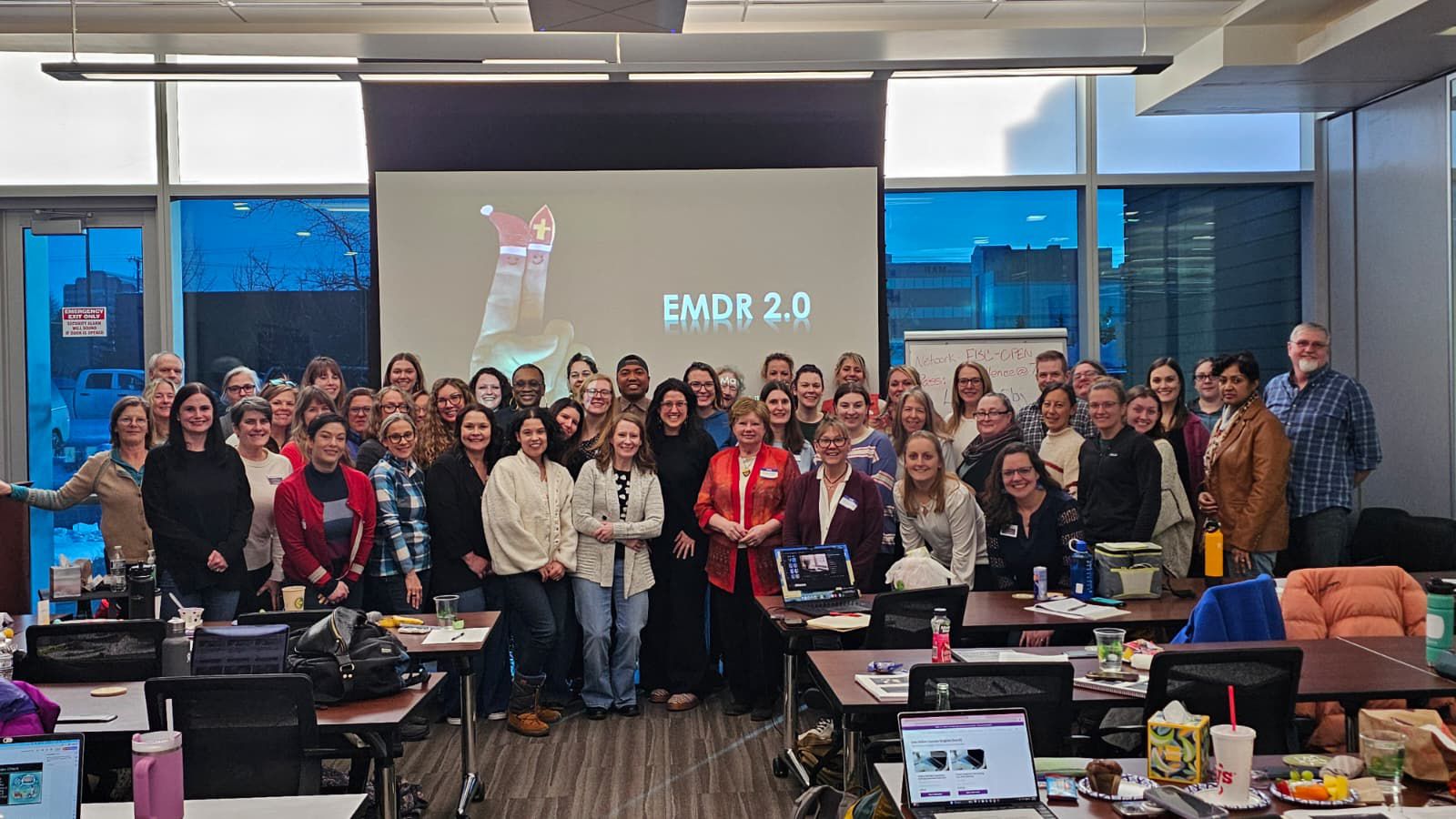

Interested in one of these workshops?
Fill in the form below and we will come back to you shortly with dates, practical arrangements and pricing for your organisation.
Request an in-company training
Please mention in your message:
1. Which workshop(s) you are interested in
2. On-site at your organisation or live online
3. Approximate group size and preferred period
4. Any further questions